
apes unit 1 study guide
Apes Unit 1 Study Guide: Ecosystems
AP Environmental Science (APES) Unit 1 focuses on foundational ecological principles, examining Earth’s processes and the interconnectedness of living systems.
This unit introduces key concepts like abiotic/biotic factors, levels of organization, and essential math skills for environmental analysis.
AP Environmental Science Unit 1 serves as a crucial cornerstone for understanding the complexities of the natural world. As highlighted on June 18, 2024, by Jenni MacLean, this unit meticulously examines how all of the processes on Earth work.
It establishes a foundational understanding of ecosystems, setting the stage for subsequent units. Students will delve into the intricate relationships between organisms and their environment, exploring concepts like energy flow and nutrient cycles. Mastering this unit is paramount, as it provides the essential framework for tackling more advanced environmental challenges throughout the course.
Preparation resources, such as Quizlet flashcards, are available to aid in comprehension.
Ecosystem Structure and Components
Ecosystem structure is a fundamental aspect of AP Environmental Science Unit 1, focusing on the interplay between living and non-living elements. Key components include abiotic factors – such as sunlight, water, and nutrients – and biotic factors, encompassing all living organisms.
Understanding levels of ecological organization is crucial, progressing from individual organisms to species, populations, communities, and ultimately, entire ecosystems. Quizlet flashcards, as of today, April 30, 2026, specifically address these concepts. This hierarchical structure demonstrates how interactions at each level shape the overall ecosystem dynamics and resilience.
Abiotic and Biotic Factors
Abiotic factors represent the non-living chemical and physical elements within an ecosystem, critically influencing the survival and distribution of organisms. Examples include temperature, light availability, soil composition, and water availability – all impacting biological processes.
Conversely, biotic factors encompass all living components, such as plants, animals, fungi, and bacteria. Interactions between these organisms – competition, predation, symbiosis – shape community structure; As highlighted in APES Unit 1 resources, understanding both abiotic and biotic influences is essential for analyzing ecosystem health and stability, forming the basis for further ecological study.
Levels of Ecological Organization
Ecological organization progresses through several hierarchical levels, starting with an organism – a single individual. Similar organisms form a species, and groups of the same species in a defined area constitute a population.
Multiple populations interacting within a habitat create a community, encompassing all living things in that space. Finally, a ecosystem integrates the community with its non-living environment, including abiotic factors. As noted in APES Unit 1 study guides, mastering these levels is crucial for comprehending the complexity and interconnectedness of natural systems.
Energy Flow in Ecosystems
Energy flow is fundamental to ecosystem function, beginning with producers (autotrophs) like plants capturing sunlight through photosynthesis. This energy is then transferred to consumers – herbivores, carnivores, and omnivores – who obtain energy by consuming other organisms.
Decomposers break down dead organic matter, releasing nutrients back into the ecosystem. This energy transfer occurs across trophic levels, visualized in food webs. Understanding these dynamics, as emphasized in APES Unit 1, is vital for analyzing ecosystem stability and the impact of disturbances.

Producers, Consumers, and Decomposers

Producers, like plants, form the base of every ecosystem, converting sunlight into usable energy through photosynthesis. Consumers obtain energy by consuming other organisms; herbivores eat plants, carnivores eat animals, and omnivores consume both.
Crucially, decomposers – bacteria and fungi – break down dead organic matter, recycling vital nutrients back into the environment. This process fuels continued productivity. APES Unit 1 stresses understanding these roles, as energy flows through these groups, dictating ecosystem health and resilience.
Trophic Levels and Food Webs
Trophic levels represent the position an organism occupies within a food chain, starting with producers (level 1) and ascending through primary, secondary, and tertiary consumers. Energy transfer between levels is inefficient, with roughly only 10% moving upwards – a key concept in APES.
Food webs are interconnected networks of multiple food chains, illustrating the complex feeding relationships within an ecosystem. They demonstrate stability; a diverse web buffers against species loss. Understanding these structures is vital for analyzing ecosystem dynamics and predicting impacts.
Biogeochemical Cycles
Biogeochemical cycles are pathways for the circulation of chemical elements essential for life, like water, carbon, and nitrogen, through biotic and abiotic components of ecosystems. These cycles are crucial for maintaining life on Earth and are heavily influenced by human activities.
Disruptions to these cycles, such as increased carbon emissions or nitrogen runoff, can have significant environmental consequences. Studying these cycles helps us understand how ecosystems function and how human actions impact planetary health, a core focus of APES.
Water Cycle
The water cycle, also known as the hydrologic cycle, describes the continuous movement of water on, above, and below the surface of the Earth. Key processes include evaporation, transpiration, condensation, precipitation, and runoff. This cycle is driven by solar energy and gravity, distributing water resources globally.
Understanding the water cycle is vital in APES as it impacts weather patterns, climate, and the availability of freshwater for ecosystems and human use. Human activities, like deforestation and urbanization, significantly alter this cycle.
Carbon Cycle
The carbon cycle is the biogeochemical process by which carbon is exchanged among the biosphere, pedosphere, geosphere, hydrosphere, and atmosphere of the Earth. It involves processes like photosynthesis, respiration, decomposition, and combustion. Carbon exists in various forms, including carbon dioxide, organic matter, and fossil fuels.
In APES, the carbon cycle is crucial because human activities, particularly burning fossil fuels, have dramatically increased atmospheric carbon dioxide, contributing to climate change and ocean acidification. Understanding this cycle is key to addressing environmental challenges;
Nitrogen Cycle
The nitrogen cycle is a vital biogeochemical process transforming nitrogen between various chemical forms. Atmospheric nitrogen is converted into usable forms by nitrogen-fixing bacteria, then moves through the food web. Denitrification returns nitrogen to the atmosphere.
Understanding this cycle is critical in APES because human activities, like fertilizer use, disrupt it, leading to eutrophication in aquatic ecosystems and contributing to greenhouse gas emissions. Imbalances impact plant growth and overall ecosystem health, demanding sustainable practices.
Population Ecology
Population ecology examines how and why populations change over time. Key concepts include population growth models – exponential and logistic – which illustrate how populations increase under ideal conditions or with limiting factors.
Carrying capacity represents the maximum population size an environment can sustain, influenced by resources like food, water, and space. Understanding these dynamics is crucial in APES, as human population growth significantly impacts resource availability and ecosystem stability, driving environmental challenges.
Population Growth Models
Exponential growth describes population increase under ideal conditions, resulting in a J-shaped curve – a rapid acceleration. However, this is rarely sustainable long-term. Logistic growth accounts for limiting factors, creating an S-shaped curve where growth slows as it approaches carrying capacity.
These models are vital for understanding population dynamics. APES students must grasp how birth rates, death rates, immigration, and emigration influence population size and how environmental constraints regulate growth, impacting resource use and ecosystem health.
Carrying Capacity
Carrying capacity represents the maximum population size an environment can sustainably support, given available resources like food, water, and shelter. It’s not a fixed number, fluctuating with environmental changes. Populations often oscillate around carrying capacity due to factors like resource availability and predation.
Understanding this concept is crucial in APES, as exceeding carrying capacity can lead to resource depletion, increased mortality, and ecosystem instability. Factors influencing carrying capacity are essential for predicting population trends and managing environmental resources effectively.
Community Ecology
Community ecology explores interactions between different species within a shared habitat. These interactions profoundly shape ecosystem structure and function. Key relationships include competition, where species vie for limited resources, and predation, involving one species consuming another.
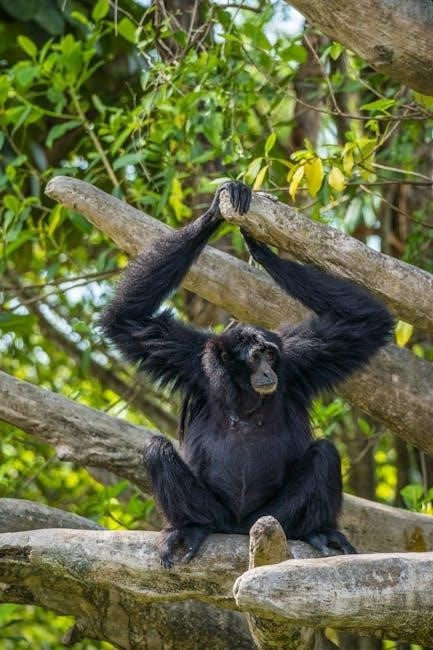
Symbiosis encompasses various close interactions: mutualism (both benefit), commensalism (one benefits, the other unaffected), and parasitism (one benefits, the other harmed). Analyzing these dynamics is vital for understanding biodiversity, stability, and the intricate web of life within ecosystems.
Species Interactions (Competition, Predation, Symbiosis)
Competition occurs when species require the same limited resources, impacting growth, reproduction, and survival. Predation involves a predator consuming prey, influencing population sizes and driving evolutionary adaptations. Symbiosis represents close, long-term interactions.
Mutualism benefits both species, like pollination. Commensalism benefits one species without affecting the other, such as barnacles on whales. Parasitism benefits one species (the parasite) at the expense of the host. Understanding these interactions is crucial for analyzing community structure and ecosystem health.
Ecosystem Services
Ecosystem services are the numerous benefits humans derive from functioning ecosystems. These include provisioning services like clean water and timber, regulating services such as climate regulation and flood control, and supporting services like nutrient cycling and pollination.
Cultural services encompass aesthetic, recreational, and spiritual benefits. Recognizing the economic value of these services is vital for conservation efforts. Degradation of ecosystems diminishes these benefits, impacting human well-being and sustainable development. Protecting biodiversity is key to maintaining these essential services for future generations.
Importance of Ecosystem Services
Ecosystem services are fundamentally crucial for human survival and prosperity. They underpin global economies, providing resources and regulating environmental conditions essential for agriculture, health, and overall quality of life.
Healthy ecosystems offer protection from natural disasters, purify air and water, and contribute significantly to climate stability. Ignoring their value leads to unsustainable practices and environmental degradation. Recognizing their importance fosters responsible resource management and promotes conservation, ensuring long-term ecological and economic sustainability for all.
Human Impact on Ecosystems
Human activities exert substantial pressure on ecosystems globally, leading to significant alterations and degradation. Pollution, in its various forms, contaminates air, water, and soil, harming biodiversity and human health.
Habitat loss and fragmentation, driven by deforestation and urbanization, disrupt ecological processes and threaten species survival. These impacts collectively diminish ecosystem services, impacting climate regulation, resource availability, and overall environmental stability. Understanding these consequences is vital for promoting sustainable practices and mitigating further damage.
Pollution and its Effects
Pollution manifests in diverse forms – air, water, and soil – each with cascading ecological consequences. Air pollutants contribute to acid rain and respiratory problems, while water pollution harms aquatic life and contaminates drinking water sources.
Soil contamination impacts plant growth and enters the food chain. These pollutants disrupt ecosystem functions, reduce biodiversity, and threaten human health. Addressing pollution requires preventative measures, remediation strategies, and stringent regulations to minimize environmental damage and safeguard ecological integrity.
Habitat Loss and Fragmentation
Habitat loss, primarily driven by deforestation and urbanization, represents a critical threat to biodiversity. As natural areas diminish, species face reduced resources and increased vulnerability. Habitat fragmentation further exacerbates the issue, dividing large, continuous habitats into smaller, isolated patches.
This isolation restricts gene flow, limits species’ ability to find mates and resources, and increases edge effects. Consequently, populations decline, and ecosystems become less resilient. Conservation efforts must prioritize habitat preservation and restoration to mitigate these detrimental impacts.
Essential Math Review for APES Unit 1
AP Environmental Science requires quantitative skills for analyzing ecological data. Unit 1 necessitates proficiency in basic calculations, including percentage change, ratios, and unit conversions. Understanding dimensional analysis is crucial for solving problems involving rates and densities.
Population growth calculations, involving growth rate and doubling time, are also fundamental. Students should practice working with scientific notation and interpreting graphs. Mastering these mathematical concepts will enhance your ability to interpret environmental data and succeed on the AP exam.
Review Resources and Study Strategies
Effective studying for AP Environmental Science Unit 1 involves utilizing diverse resources. Quizlet flashcards and comprehensive study guides offer excellent review of key terms and concepts, like ecosystem structure and levels of organization.
Studocu provides valuable notes and overviews from other students, offering different perspectives on the material. Practice applying concepts through problem-solving and actively reviewing past questions. Consistent, focused study sessions, combined with these resources, will build a strong foundation for success in this foundational unit.
Quizlet Flashcards and Study Guides
Quizlet is a powerful tool for mastering AP Environmental Science Unit 1 content. Numerous flashcard sets, like those created by Camila_Lugo, focus on ecosystem structure – including abiotic and biotic factors – and levels of organization.
These resources facilitate memorization of essential terminology and concepts. Supplementing flashcards with comprehensive study guides allows for deeper understanding and application of knowledge. Utilizing Quizlet’s features, such as learn and test modes, enhances retention and prepares you effectively for assessments. A current set has 3.7 rating with 50 reviews!

Studocu Notes and Overviews
Studocu provides valuable AP Environmental Science Unit 1 resources, including detailed notes and overviews of ecosystems. Jenni MacLean’s notes, dated June 18, 2024, emphasize that this unit is foundational, exploring how all Earth’s processes interrelate.
These materials offer a broader context for understanding key concepts, complementing Quizlet flashcards; Studocu often contains student-contributed summaries and analyses, providing diverse perspectives. Accessing these overviews can significantly enhance comprehension and exam preparation, solidifying your grasp of essential ecological principles and their importance.

Leave a Reply
You must be logged in to post a comment.