
schumacher farm and ranch battery charger manual
Schumacher Farm & Ranch Battery Charger Manual: A Comprehensive Guide
This comprehensive guide details safe and effective operation of Schumacher Farm & Ranch chargers, covering safety, features, modes, troubleshooting, and warranty details.
Schumacher Farm & Ranch chargers are specifically engineered to meet the demanding power needs of agricultural and rural lifestyles. These robust chargers provide reliable performance for a wide array of battery types, including those found in cars, trucks, marine vessels, RVs, and essential farm equipment.
Designed with durability and convenience in mind, these chargers feature automatic and manual charging modes, timer-controlled options, and are compatible with standard 12V batteries, including AGM, Gel Cell, and Deep-Cycle varieties. Understanding your specific model – such as SE-82-6, SC1309, or FR01547 – is crucial for optimal use. This manual serves as your guide to unlocking the full potential of your Schumacher charger.
Understanding the Importance of a Manual
A thorough understanding of this manual is paramount for the safe and effective operation of your Schumacher Farm & Ranch battery charger. Ignoring instructions can lead to battery damage, charger malfunction, or even personal injury. This guide details critical safety precautions, proper charging procedures, and troubleshooting steps.
It ensures you select the correct charging mode for your battery type – car, marine, farm, AGM, or deep-cycle – and understand features like automatic adjustments and timer controls. Familiarizing yourself with model-specific information, like the FR01235 or FR01335, maximizes performance and longevity. Always retain this manual for future reference.
Safety Precautions
Prioritize safety! This section outlines crucial guidelines, specific warnings for farm/ranch use, and essential electrical safety considerations for your charger.
General Safety Guidelines
Always read and understand this manual before operating the Schumacher Farm & Ranch battery charger. Ensure adequate ventilation during charging; batteries release explosive gases. Never charge a damaged battery. Avoid creating sparks near batteries, as hydrogen gas is flammable. Disconnect the charger from the AC power source before connecting or disconnecting it from the battery.
Wear appropriate eye protection, such as safety glasses, during charging. Do not operate the charger in a confined space. Keep the charger dry and away from flammable materials. Inspect cables and clamps for damage before each use. Never attempt to modify the charger. Use the charger only for its intended purpose – charging lead-acid batteries.
Specific Warnings for Farm & Ranch Chargers
Farm & Ranch chargers are designed for heavy-duty applications, but require extra caution. Be aware of the potential for increased sparking due to larger clamps and higher amperage. Ensure the charger is placed on a stable, non-conductive surface, especially in outdoor farm environments. Avoid using near flammable liquids or gases common in agricultural settings.
Regularly inspect for corrosion on clamps, as farm equipment often operates in harsh conditions. Never attempt to charge frozen batteries; they can explode. Disconnect the power source before any inspection or maintenance. Understand that farm batteries may have higher sulfation levels, requiring longer charging times. Always follow all general safety guidelines in addition to these specific warnings.
Electrical Safety Considerations
Always verify the power outlet is properly grounded and matches the charger’s voltage requirements (typically 120V). Never operate the charger with damaged cords or plugs – replace them immediately. Avoid using extension cords unless absolutely necessary, and if used, ensure they are heavy-duty and rated for the charger’s amperage.
Do not expose the charger to rain or moisture, as this poses a severe electrical shock risk. Disconnect the charger from the power source before connecting or disconnecting it from the battery. Be cautious of live circuits and avoid touching terminals while the charger is energized. Ensure adequate ventilation to prevent overheating and potential electrical hazards. Regularly inspect the charger for any signs of electrical damage.

Product Features & Specifications
Schumacher Farm & Ranch chargers boast diverse features, including multiple model numbers, varying capacities (150A, 10-Amp), and 12V compatibility for various battery types.
Model Number Identification (SE-82-6, SC1309, INC-700A, FR01235, FR01335, FR01547)
Identifying your specific Schumacher Farm & Ranch charger model is crucial for accessing the correct manual and support resources. The model number is typically located on the charger itself – check the back, bottom, or top label. Common model numbers include SE-82-6, SC1309, and INC-700A.
For the Farm & Ranch series, look for FR01235, FR01335, or FR01547. This number dictates the charger’s features and capabilities. Having the correct model number ensures you’re following the appropriate charging instructions and safety guidelines. Refer to this number when downloading manuals or contacting customer support for assistance.
Charger Capacity (150A, 10-Amp)
Schumacher Farm & Ranch chargers offer varying capacities to suit different battery sizes and charging needs. You’ll find models with a higher 150A capacity, designed for rapid jump-starting and heavy-duty applications. These are ideal for larger farm equipment and trucks.
Alongside these, many chargers feature a 10-Amp setting, providing a slower, more controlled charge – perfect for maintaining battery health and preventing overcharging. Understanding your charger’s capacity is vital for selecting the appropriate charge rate and ensuring optimal battery performance. Always consult the manual for recommended usage.
Voltage Compatibility (12V)
Schumacher Farm & Ranch battery chargers are specifically designed for 12-volt battery systems. This is the standard voltage for most automotive, marine, RV, and farm equipment batteries. Attempting to use a 12V charger on a different voltage system (like 6V or 24V) can cause severe damage to both the charger and the battery.
Confirming voltage compatibility is a crucial safety step before connecting the charger. The manual clearly states this 12V specification. Using the correct voltage ensures efficient charging and prolongs the life of your battery. Incorrect voltage application voids any warranty claims.
Battery Type Compatibility (Car, Truck, Marine, RV, Farm Equipment, AGM, Gel Cell, Deep-Cycle)
Schumacher Farm & Ranch chargers demonstrate versatile compatibility, effectively charging a wide array of battery types. This includes standard flooded batteries found in cars and trucks, as well as those used in marine vessels, recreational vehicles (RVs), and various farm equipment applications.
Furthermore, these chargers are suitable for advanced battery technologies like Absorbed Glass Mat (AGM), Gel Cell, and Deep-Cycle batteries. The automatic charging mode intelligently adjusts to the specific needs of each battery type, preventing overcharging and maximizing battery lifespan. Always consult the manual for optimal settings.

Charging Modes & Operation
Schumacher chargers offer automatic, manual, and timer-controlled modes, providing versatile charging options for diverse battery needs and user preferences.
Automatic Charging Mode Explained
The automatic charging mode is a key feature of Schumacher Farm & Ranch chargers, designed for convenience and optimal battery health. This mode intelligently monitors the battery’s condition throughout the charging cycle. It automatically adjusts the charge rate to prevent overcharging or undercharging, extending battery life for car, truck, marine, RV, and farm equipment batteries.
The charger initially delivers a higher current for faster initial charging, then gradually reduces the current as the battery reaches full capacity. This prevents damage to AGM, Gel Cell, and Deep-Cycle batteries. The automatic mode eliminates the need for constant user intervention, making it ideal for routine battery maintenance and ensuring a consistently charged battery.
Manual Charging Mode (If Applicable)
Certain Schumacher Farm & Ranch chargers may offer a manual charging mode, providing users with greater control over the charging process. This mode allows for a fixed charge rate to be selected, bypassing the automatic adjustments. It’s particularly useful for specific battery types or situations where a precise charging profile is required.
When using manual mode, careful monitoring is crucial to prevent overcharging, which can damage the battery. Users must actively observe the battery’s voltage and temperature. This mode is generally recommended for experienced users familiar with battery charging principles and the specific needs of their battery type – car, truck, marine, or farm equipment.
Timer-Controlled Charging Features
Many Schumacher Farm & Ranch chargers incorporate timer-controlled charging features, enhancing convenience and preventing overcharging. This allows users to set a specific duration for the charging cycle, automatically shutting off the charger once the time elapses. This is beneficial for batteries that require a controlled charge, or when unattended charging is necessary.
The timer function offers flexibility, accommodating various battery types and charging needs. Users can select from pre-set time intervals or customize the duration based on the battery’s capacity and state of discharge. Always consult battery specifications for optimal charging times and avoid excessively long durations.
Connecting the Charger to the Battery
Proper connection is crucial for safe and effective charging. First, ensure the charger is switched off before connecting to the battery. Attach the red (positive) clamp to the positive terminal of the battery, and the black (negative) clamp to the vehicle’s chassis or the negative battery terminal.
Ensure a secure connection, avoiding loose clamps which can cause sparking. Double-check polarity – reversed connections can severely damage the charger and battery. For top-post batteries, firmly grip the posts. Side-post batteries require specialized adapters for a secure fit.
Operating Instructions
Follow these steps for optimal charging: connect clamps, select the mode, monitor the battery, adjust the rate, and disconnect when fully charged.
Step-by-Step Charging Process
Begin by ensuring the charger is switched off before connecting to the battery. Attach the red clamp to the positive terminal and the black clamp to the negative terminal. Double-check these connections for security. Select the appropriate charging mode – automatic or manual – based on your battery’s needs and the charger’s capabilities.
If using automatic mode, the charger will assess the battery and begin charging accordingly. For manual mode, set the desired amperage. Monitor the charging process, observing the battery voltage and current draw. Once the battery reaches full charge, the charger will typically switch to a maintenance or float mode. Disconnect the clamps in reverse order – black first, then red – and switch off the charger.
Monitoring Battery Condition During Charge
Regularly observe the charger’s indicators, such as voltage and amperage readings, to track the battery’s charging progress. Many Schumacher chargers feature LED displays providing this information. Note any unusual fluctuations or inconsistencies, which could indicate a problem with the battery or the charging process.
Periodically check the battery’s temperature; excessive heat suggests overcharging or a faulty battery. Avoid prolonged charging beyond full capacity, as this can damage the battery. Utilize the charger’s automatic features, if available, to prevent overcharging. A fully charged battery will typically show a stable voltage reading and reduced current draw.
Adjusting Charge Rate
Schumacher Farm & Ranch chargers often offer multiple charge rate settings, typically ranging from a slow, trickle charge to a faster, high-amp charge. Selecting the appropriate rate depends on the battery’s size, type, and state of discharge. For deeply discharged batteries, a lower charge rate is recommended initially to avoid damage.
Higher rates are suitable for quickly charging batteries that are not severely depleted. Refer to the battery manufacturer’s recommendations for optimal charging rates. Monitor the battery’s temperature while adjusting the charge rate; excessive heat indicates the rate is too high. Utilize the charger’s automatic features when available.

Troubleshooting Common Issues
This section provides solutions for typical problems, including a charger that won’t power on, batteries failing to charge, overheating, and deciphering error codes.
Charger Not Powering On
If the Schumacher charger fails to power on, first verify the AC power source is functioning correctly by testing with another device. Ensure the power cord is securely connected to both the charger and the outlet. Inspect the fuse within the charger plug – a blown fuse will prevent operation and requires replacement with the correct amperage rating.
Check the on/off switch to confirm it’s in the ‘on’ position. Examine the DC cables for any breaks or damage, as a short circuit could trigger a safety shutdown. If using an extension cord, ensure it’s heavy-duty and capable of handling the charger’s power draw. A faulty internal component may necessitate professional repair or replacement of the unit.
Battery Not Charging
If the battery isn’t charging, confirm proper cable connections – positive to positive, negative to a grounded metal surface. Verify correct polarity; reversed connections can damage the charger and battery. Ensure the battery isn’t severely discharged or sulfated, as these conditions may require a desulfating charge mode (if available).
Check the charger’s voltage setting to match the battery’s voltage (typically 12V). Inspect the battery terminals for corrosion or debris, hindering a good connection. A faulty battery may not accept a charge; testing with a voltmeter is recommended. Consider the charger’s amperage; a low amperage may result in a very slow charge.
Overheating Problems
If the charger overheats, immediately disconnect it from the power source and the battery. Ensure adequate ventilation around the charger; avoid enclosing it or placing it in a confined space. Check for blocked cooling vents, removing any obstructions that restrict airflow. Prolonged charging of a fully charged battery can cause overheating; use timer features if available.
Verify the charger isn’t operating beyond its specified duty cycle. Inspect the internal components (if you are qualified) for signs of damage or malfunction. A faulty transformer or rectifier could contribute to overheating. Do not continue using an overheating charger; seek repair or replacement.
Error Codes and Their Meanings
While specific error codes vary by model (SE-82-6, SC1309, etc.), a flashing light or a specific beep sequence often indicates a problem. Consult your charger’s specific manual for a complete list of codes and their corresponding meanings. Common issues include reverse polarity connection (red to negative, black to positive), which can trigger an error.
A low voltage or sulfated battery may also generate an error code. Some chargers display codes indicating a faulty battery cell or an open circuit. If an error persists after troubleshooting, disconnect the charger and contact Schumacher customer support for assistance. Do not attempt to bypass safety features indicated by error codes.

Maintenance & Care
Regular cleaning, cable/clamp inspection, and proper storage are crucial for longevity. Ensure connections are clean and free of corrosion for optimal performance.
Cleaning the Charger
Maintaining a clean charger is essential for safe and efficient operation. Before any cleaning, always disconnect the charger from the power source to prevent electrical shock. Use a damp cloth to wipe down the exterior casing, removing any dirt, dust, or grime that may have accumulated.
Avoid using harsh chemicals or abrasive cleaners, as these can damage the plastic housing or internal components. For stubborn dirt, a mild soap solution can be used, but ensure the charger is thoroughly dried afterward. Never immerse the charger in water or any other liquid. Pay particular attention to cleaning the battery clamps, as corrosion can build up and impede conductivity. Inspect the clamps regularly and clean them with a wire brush if necessary.
Cable and Clamp Inspection
Regular inspection of the cables and clamps is crucial for safe charging. Before each use, carefully examine the cables for any signs of damage, such as cracks, fraying, or exposed wires. Do not use the charger if the cables are damaged, as this poses a serious electrical hazard.
Inspect the clamps for corrosion or looseness. Clean corroded clamps with a wire brush to ensure a good connection. Ensure the clamps securely grip the battery terminals during charging. Replace damaged cables or clamps immediately to maintain optimal performance and safety. A compromised cable can hinder charging efficiency and potentially cause a fire.
Storage Recommendations
Proper storage extends the life of your Schumacher Farm & Ranch battery charger. When not in use, disconnect the charger from the power outlet. Store it in a cool, dry place, away from direct sunlight and extreme temperatures. Avoid storing the charger in damp or humid environments, as this can cause corrosion.
Coil the cables neatly and secure them to prevent damage. Keep the charger upright to prevent any potential fluid leakage. Regularly check the stored charger for any signs of deterioration. Following these recommendations ensures your charger remains in optimal condition for future use and reliable performance.
Warranty Information
Schumacher provides warranty coverage details for Farm & Ranch chargers, outlining claim procedures and limitations. Review the manual for specific terms and conditions.
Warranty Coverage Details
Schumacher’s warranty safeguards against defects in materials and workmanship for a specified period from the date of purchase. The duration varies by model, so consulting your specific manual is crucial. Generally, the warranty covers repair or replacement of defective parts, excluding those damaged by misuse, accidents, or unauthorized modifications.
Normal wear and tear is not covered, nor are issues arising from improper maintenance or failure to follow operating instructions. Proof of purchase is required for all warranty claims. Schumacher reserves the right to inspect any returned product before determining warranty eligibility. This warranty provides limited remedies, and Schumacher is not liable for consequential damages.
How to Make a Warranty Claim
To initiate a warranty claim, first, retain your original proof of purchase – this is essential. Contact Schumacher’s customer service department via phone or their website to obtain a Return Merchandise Authorization (RMA) number. Package the defective charger securely, including all accessories, and clearly mark the RMA number on the outside of the package.
Ship the charger prepaid to the address provided by Schumacher. Include a detailed description of the defect and the circumstances under which it occurred. Schumacher will evaluate the claim and, if approved, repair or replace the charger. Allow sufficient time for processing and return shipping.
Limitations of the Warranty
The warranty does not cover damage resulting from misuse, abuse, neglect, accidents, alterations, or unauthorized repairs; It excludes normal wear and tear, including cable and clamp deterioration. Damage caused by improper voltage input or incorrect battery connections is also not covered.
Furthermore, the warranty is void if the charger is disassembled or modified. Schumacher is not liable for incidental or consequential damages. This warranty provides specific legal rights, and other rights may vary by location. Always follow the operating instructions to maintain warranty validity.
Downloading Manuals
Access high-quality PDF manuals in English, Spanish, and French online, for series like Ship n Shore, SpeedCharge, and ProSeries, instantly!
Accessing Manuals Online (English, Spanish, French)
Schumacher provides convenient online access to battery charger manuals in multiple languages, ensuring broad accessibility for all users. You can easily download PDF versions of the manuals directly from Schumacher’s official website.
These digital resources are available in English, Spanish, and French, catering to a diverse customer base; Finding the correct manual is simplified by searching either by the specific model number (like SE-82-6, SC1309, or FR01235) or by the product series (such as Ship n Shore, SpeedCharge, or ProSeries).
This online availability allows for quick and easy access to important information regarding safety precautions, operating instructions, and troubleshooting tips, eliminating the need to physically store paper copies.
Ship n Shore, SpeedCharge, Instant Power, ProSeries Series Manuals
Schumacher categorizes its battery chargers into distinct series, each with dedicated manuals available for download. The Ship n Shore series manuals provide detailed instructions for marine and heavy-duty applications. SpeedCharge manuals focus on rapid charging capabilities and optimized performance.
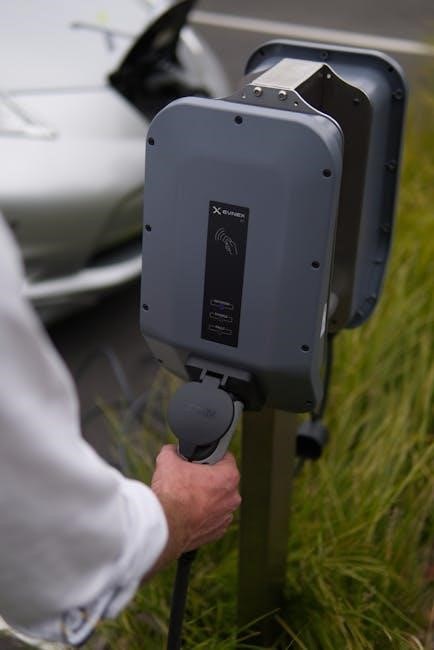
Instant Power series documentation details features for quick jump-starts and emergency power solutions. ProSeries manuals cover advanced charging technologies and professional-grade features.
Locating the correct manual for your specific series ensures you have access to the most relevant information regarding operation, safety, and troubleshooting. These manuals are typically available in PDF format for easy viewing and download, offering comprehensive guidance for each product line.
Universal Schumacher Battery Charger Manuals
Schumacher offers universal battery charger manuals designed to cover a broad range of models, simplifying the search for information. These manuals often consolidate instructions for chargers sharing similar functionalities and features. While not model-specific, they provide valuable guidance on basic operation, safety precautions, and troubleshooting steps.
These resources are particularly useful when a dedicated manual for your exact model isn’t readily available. They detail common charging procedures, battery type compatibility, and essential maintenance practices.
However, always prioritize a model-specific manual when possible, as it will contain the most accurate and detailed information for your charger.
Leave a Reply
You must be logged in to post a comment.